Fortis Energy schließt Solarinstallation an allen 26 Stationen des Istanbuler Marmaray-Schienennetzes ab
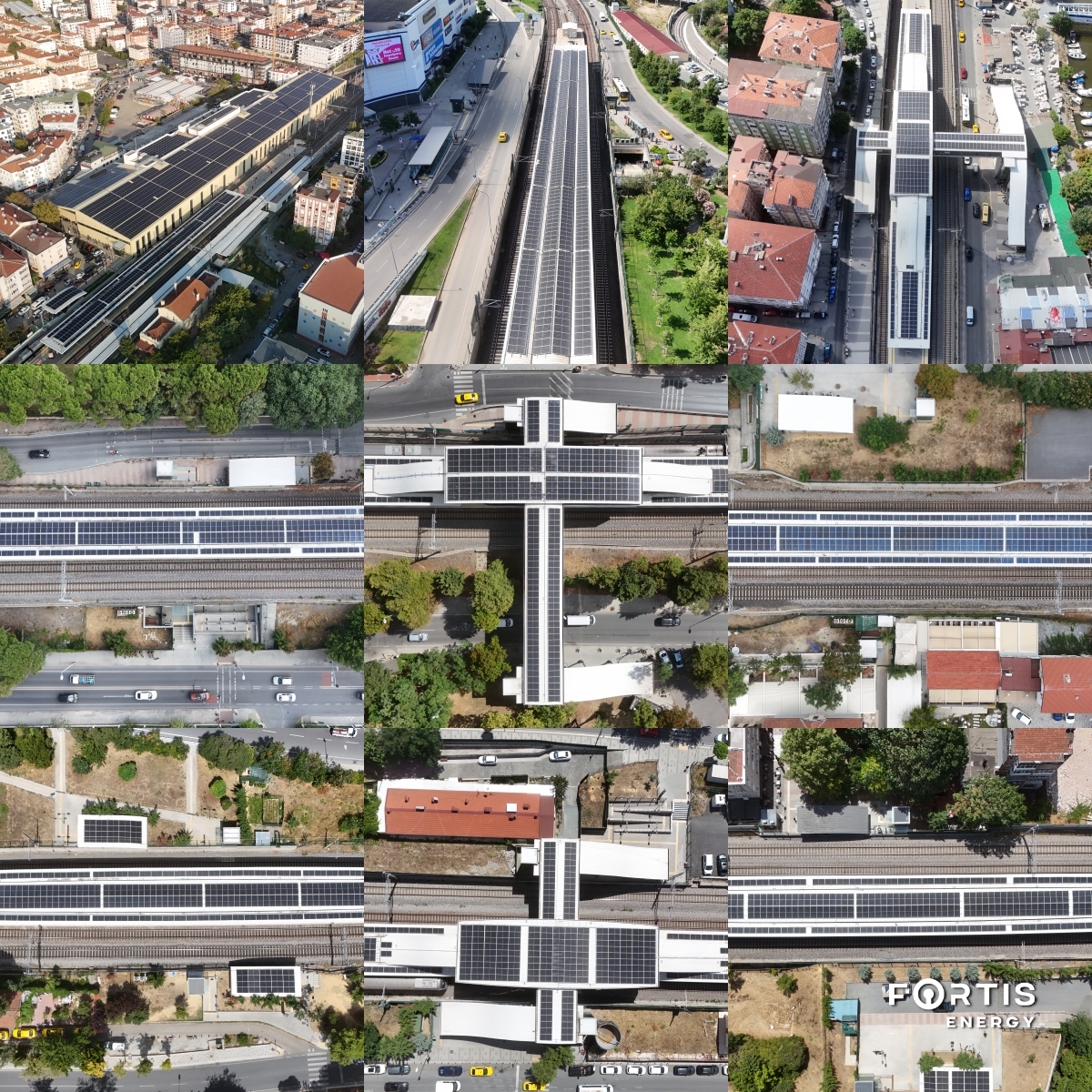 Fortis Energy hat die Installation des Solarenergieprojekts auf der Istanbuler Marmaray-Linie abgeschlossen, dem S-Bahn-System, das die asiatische und europäische Seite der Stadt verbindet und einen der strategischsten Verkehrskorridore der Türkei darstellt.
Im Rahmen des von der Türkischen Staatsbahn (TCDD) entwickelten Projekts zur Umwandlung der Dächer von Marmaray-Stationen und Verwaltungsgebäuden in Erzeugungsstandorte wurden die Solarpanelmontage, die Stahlbau- und Trägersysteme sowie die vollständige elektromechanische Integration an allen 26 Stationen auf beiden Kontinenten abgeschlossen. Die Anlagen sind nun betriebsbereit.
Der Umfang wurde in vier separate Pakete unterteilt: zwei auf der europäischen und zwei auf der anatolischen Seite. Das Abnahmeverfahren für das Paket Anatolien 1 wurde erfolgreich abgeschlossen. Die Test-, Mess- und Abnahmeverfahren für die verbleibenden drei Pakete dauern an, und die Systeme sollen schrittweise mit der Genehmigung jedes Pakets in Betrieb genommen werden.
Mit einer installierten Gesamtkapazität von 11 MW sollen die Anlagen jährlich mehr als 13 GWh Strom erzeugen. Die Produktion ist darauf ausgelegt, die Betriebslast von Marmaray – wie Stationsbeleuchtung, Belüftung, Rolltreppen und Hilfssysteme – durch lokale, emissionsfreie Erzeugung zu decken.
Schienensysteme gehören zu den energieintensivsten Komponenten der städtischen Infrastruktur, bei denen Strom einen erheblichen und kontinuierlichen Anteil an den Betriebskosten ausmacht. Die Stromerzeugung am Ort des Verbrauchs reduziert sowohl den Netzbezug als auch die langfristigen Betriebsausgaben und senkt gleichzeitig die Kohlenstoffintensität eines Netzes, das täglich Hunderte von Tausenden von Fahrgästen befördert. In einem Land, das Nettoimporteur von Primärenergie bleibt, besitzt die in den öffentlichen Nahverkehr integrierte heimische erneuerbare Kapazität auch eine messbare ökonomische Dimension.
Marmaray nimmt eine besondere Stellung im Istanbuler Verkehrsnetz ein, da es zwei Kontinente unter dem Bosporus verbindet und als Rückgrat für Pendlermobilität, vorstädtische Entwicklung und regionale Güterverkehrsanbindung dient. Die Einbettung erneuerbarer Erzeugung in diese Infrastruktur richtet die Linie an den Prinzipien nachhaltiger Urbanisierung aus, die die Verkehrsplanung in großen Metropolregionen zunehmend prägen.
Das Projekt steht an der Schnittstelle zwischen Verkehrs- und Energiesektor und stellt ein anwendbares Modell für die Integration dezentraler Erzeugung in bestehende Anlagen des öffentlichen Nahverkehrs dar.